The Living Metal: A Journey Through copper Craftsmanship and Moroccan Tradition

From ancient anvils to modern high-end homes — how copper and brass have shaped human civilization for millennia.

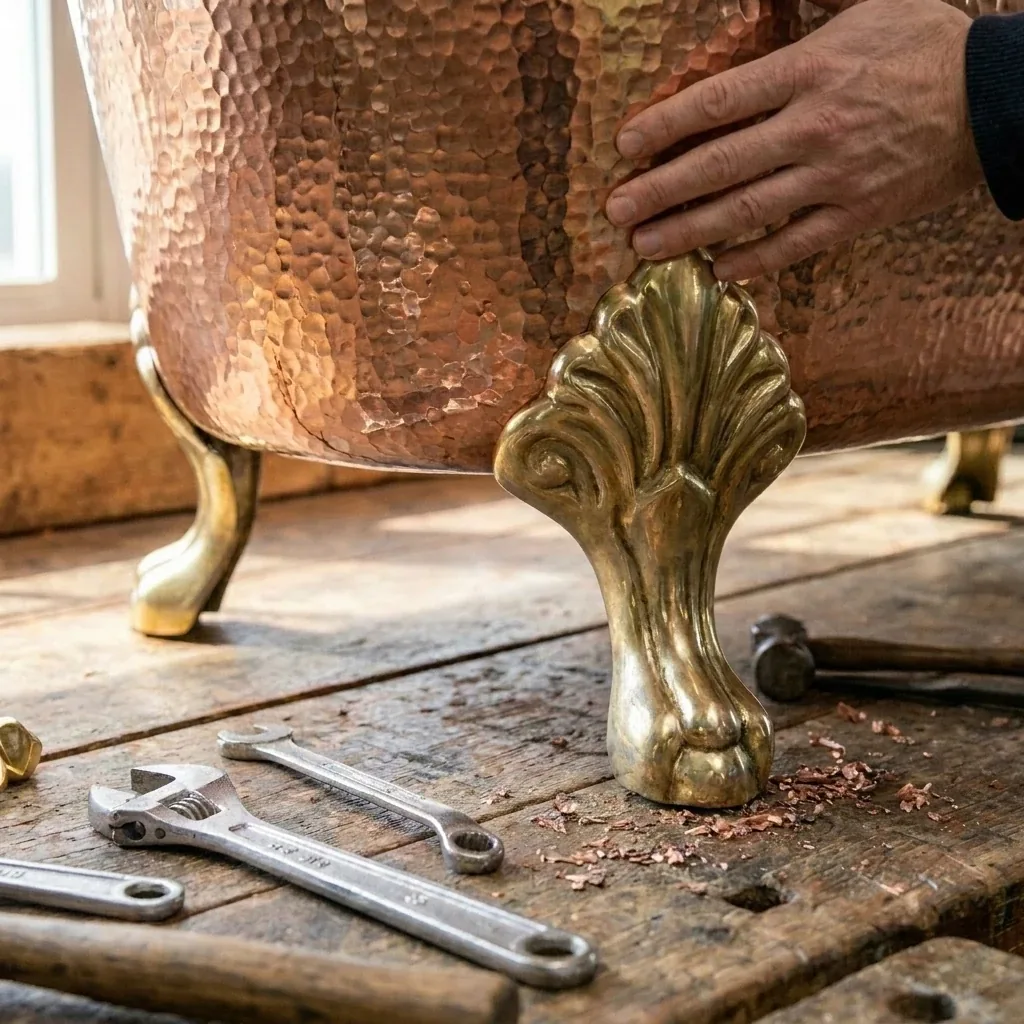
Traditional Moroccan <span>copper</span>smith Hand-Hammering Brass in historical Medina Workshop

T

he dawn of copper represents the true birth of human metallurgy—a profound evolutionary leap where humanity first broke free from the limitations of stone. Emerging during the late Neolithic and fully defining the Chalcolithic (Copper-Stone) era, this malleable red metal transformed from a rare, cold-hammered curiosity into an foundational pillar of engineering, status, and early structural wealth.
01

The Gathering: Native Nuggets & Cold Forging

Long before the invention of high-temperature smelting furnaces, early humans interacted with copper in its native state—pure, raw metallic nuggets exposed on the earth's surface or within shallow alluvial veins. Neolithic communities treated these vibrant green and red stones not as ores, but as a unique, highly malleable variant of rock.

The Cold-Working Threshold: Early craftspeople used traditional stone-hammering techniques to shape native copper. However, repeated cold striking fractures the metal's crystalline structure, causing it to become brittle and break. This structural barrier kept copper limited to small, decorative ornaments like awls, beads, and delicate pins for centuries.

Major archaeological complexes, such as the Old Copper Complex surrounding North America’s Great Lakes and early settlements in the Balkans, confirm that cold working native copper nuggets provided the initial spark for a global material shift.

02

The Pyrotechnic Leap: Annealing and Smelting

The true metallurgical revolution occurred when early metalworkers discovered the transformative power of thermal manipulation. By introducing fire to the extraction process, humanity transitioned from simply shaping found rocks to fundamentally altering the chemical state of raw earth elements.

The Annealing Discovery

  • Thermal Stress Relief: Heating hammered copper to moderate temperatures (~500°C) resets its internal crystalline structure, restoring its flexibility and allowing for complex, deep forging.
  • Structural Density: Annealed tools could be worked into thicker, vastly more reliable cross-sections without risking structural micro-cracks.
  • Edge Realignment: Repeated annealing cycles enabled smiths to forge the world's very first durable, resharpenable metal impact edges.

High-Temperature Smelting

  • Chemical Reduction: Around 5000 BC, early innovators in Southeastern Europe (such as Belovode in Serbia) learned to extract pure liquid copper from carbonate ores like malachite and azurite.
  • The 1085°C Barrier: Reaching copper's precise melting point required building specialized, oxygen-regulated charcoal kilns capable of generating sustained, intense heat.
  • The Cast Mold Revolution: Pouring liquid copper into open stone or clay channels completely replaced laborious hand-striking, giving birth to scalable, uniform tool production.
03

The Chalcolithic Shift: Stratification & Strategic Trade

As copper production scaled, it completely transformed the socio-economic structure of early human settlements. Because copper ore deposits were geographically isolated, acquiring raw metal required establishing complex, long-distance supply routes, which directly accelerated social division and the rise of ruling elites.

  • The Birth of Specialized Labor: Mining, smelting, and casting required deep, exclusive technical knowledge. This shifted communities away from simple agricultural self-sufficiency and toward highly organized, professional craft classes.
  • The Currency of Prestige: Heavy copper heavy axeheads, adzes, and elaborate personal jewelry quickly became the ultimate universal markers of institutional authority, spiritual power, and personal wealth.
  • Geopolitical Friction: Controlling rich mining centers—like Europe's ancient Rudna Glava or the Middle East's vast Timna Valley—became an immediate strategic priority, driving the development of early fortified settlements.
04

Royal Treasures & Living Surfaces

As copper mastery entered historical antiquity, its role evolved from basic survival tools into the sacred architectural fabric of royal palaces, monumental temples, and elite funerary treasures:

  • The Varna Necropolis: Elite burial chambers from 4500 BC reveal chieftains covered in heavy, polished copper sceptres and golden ornaments, proving metal was firmly tied to the afterlife and divine right.
  • Dynastic Egyptian Monuments: Early Pharaohs used heavy copper chisels to square massive limestone blocks, while lining sacred inner temple sanctuaries with reflective, beaten copper plates.
  • The Antimicrobial Legacy: Ancient civilizations quickly recognized that water stored in copper vessels remained pure and free of slime—unwittingly documenting the metal's natural oligodynamic properties millennia before modern biology.

A Timeless Foundation

From a roughly hammered Neolithic awl to the grand architectural statements of early empires, the story of copper is the story of human civilization testing its limits. It proved that true luxury and structural utility are not opposing concepts, but are deeply linked by material integrity. Long before the first bronze was poured or the first iron iron weapon was forged, copper taught humanity how to bend the raw elements of the earth to its will.