 No products in the cart.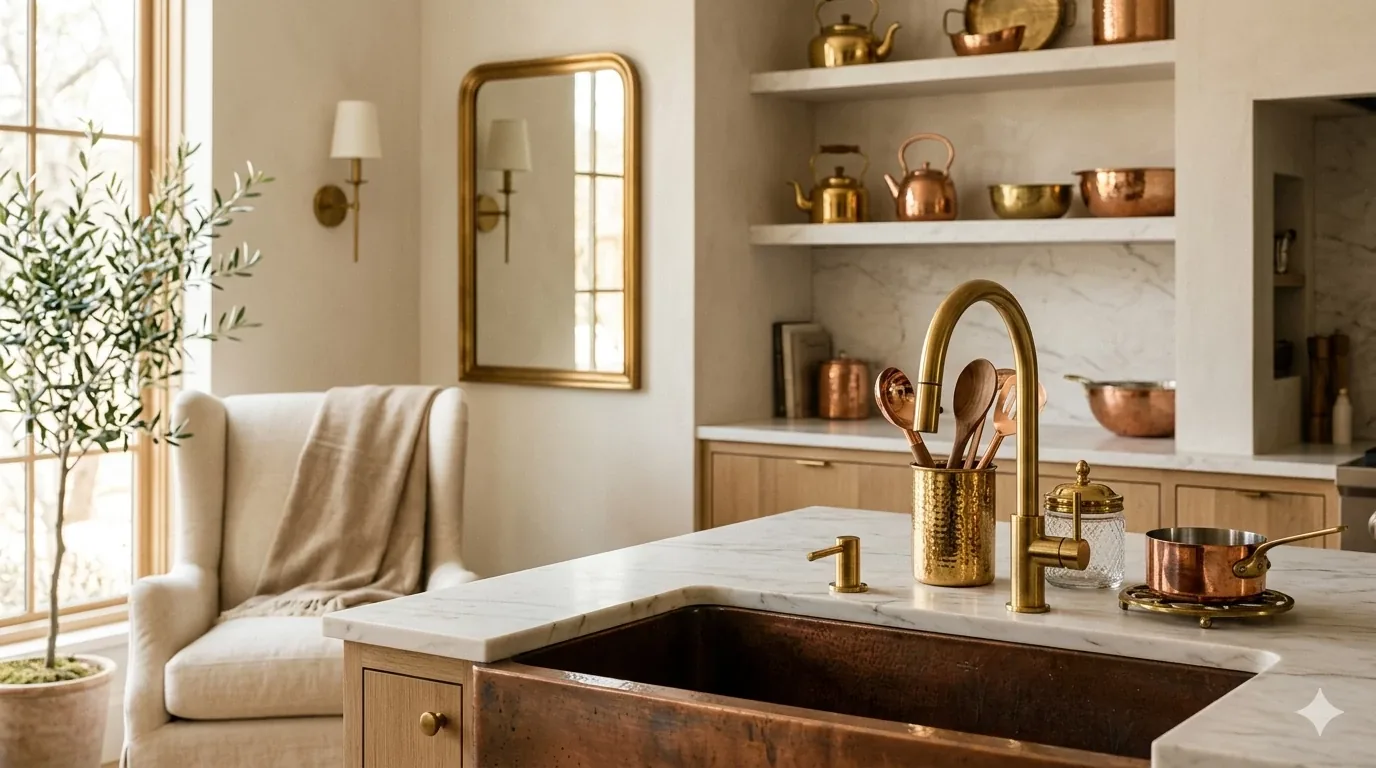
Design & Lifestyle Inspiration
Copper & Brass Are Back: What’s Trending in Interior Design?
Here’s how designers are using handcrafted metal to transform bathrooms, kitchens, and luxury spaces.
Read ArticleHonest comparisons to help you choose the right metal for your home layout.
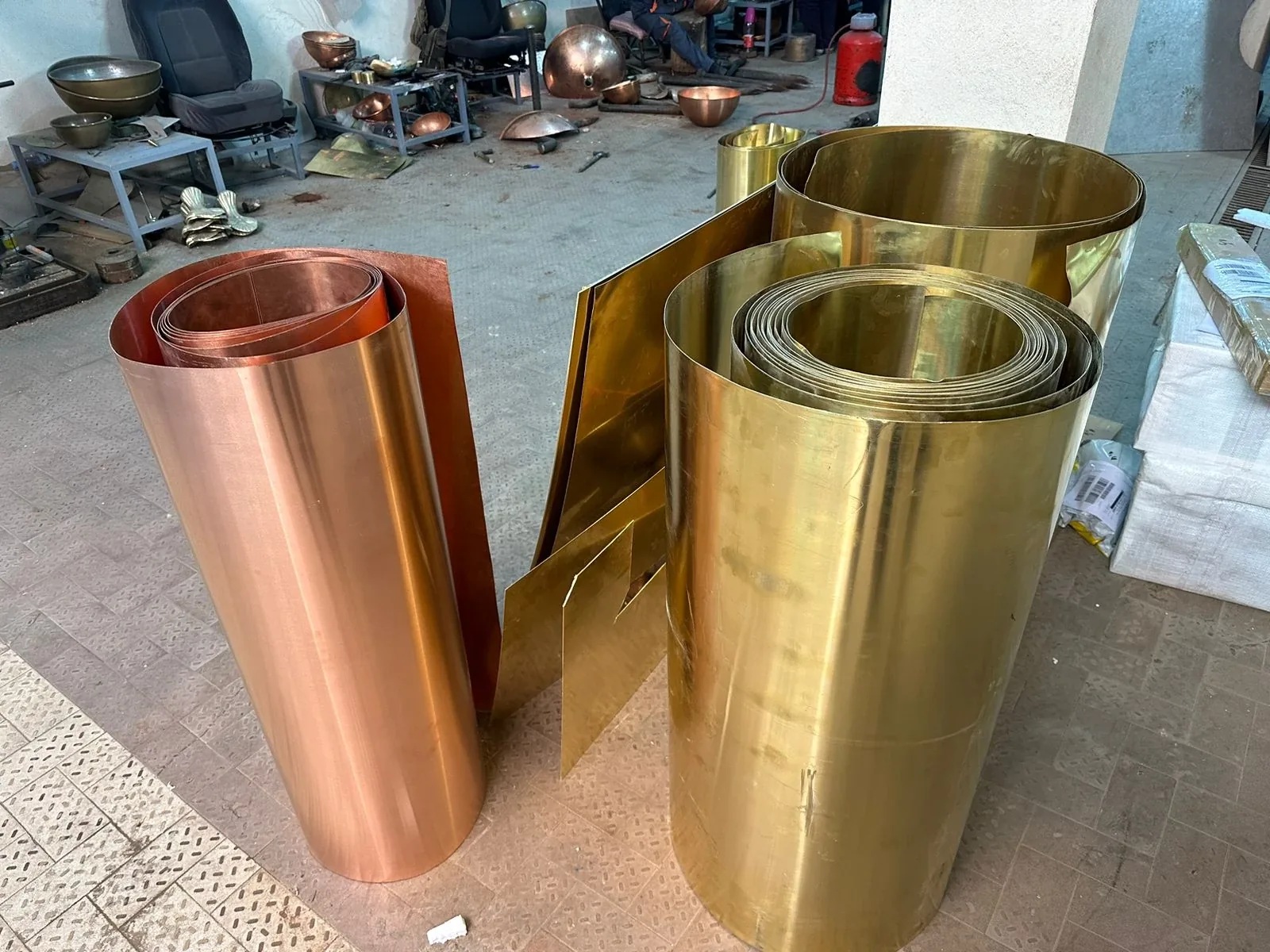
You’re standing in front of two sinks. One is stainless steel — sleek, familiar, affordable. The other is handcrafted copper — warm, textured, alive. Which do you choose? Or maybe you’re picking faucets. Chrome is classic and bright. Unlacquered brass is golden and beautifully unpredictable. Both options have passionate communities; both carry unique trade-offs. Let’s compare them directly—not to declare an arbitrary winner, but to help you decide exactly what belongs in your home.
Copper is the artisan’s choice. Stainless steel is the factory-floor standard.
| Feature | Copper | Stainless Steel |
|---|---|---|
| Appearance | Warm, reddish-brown; develops rich patina layers over time. | Cool, silver; stays identical forever. |
| Durability | Soft; surface scratches and minor dents add vintage character. | Hard; resists shallow scratches but displays prominent dings. |
| Maintenance | Hand-wash, towel dry, occasional light wax polishing. | Dishwasher-safe elements, wipes clean with basic detergents. |
| Antimicrobial | Yes — natural material properties continuously eliminate bacteria. | No — requires chemical sanitation to clear organic films. |
| Acoustic Profile | Soft, quiet acoustic dampening when water hits the basin. | Loud, resonant, metallic clanging during heavy usage. |
| Price Point | Higher upfront investment due to individual hand-forging. | Lower entry threshold due to highly automated mass production. |
| Longevity | Spans generations — fully repairable via traditional blacksmithing. | Typically 10–20 year operational window, then requires recycling. |
The Verdict: Choose copper if you desire a basin or bathing anchor that grows more beautiful with age and introduces deep visual warmth. Choose stainless steel if you prioritize near-zero maintenance and an unyielding, consistent industrial look.
Brass is the timeless comeback icon. Chrome is the reliable commercial fallback.
| Feature | Brass | Chrome |
|---|---|---|
| Appearance | Golden, warm; adaptable to mirror-polished or antique tones. | Bright, mirror-like reflection with cold blue undertones. |
| Patina Capacity | Unlacquered profiles darken organically over months of exposure. | No structural change — remains static until finish failure. |
| Tactile Marking | Records touches (unlacquered) — a prized living look for design purists. | Highlights water spots, mineral scale, and oily smudges instantly. |
| Structural Integrity | Solid cast brass lasts indefinitely and can be completely refinished. | Surface chrome plating can peel, pit, or bubble away after years. |
| Stylistic Fit | Traditional, farmhouse, Mediterranean, or moody modern (oxidized). | Contemporary, sharp minimalist, or standard commercial industrial. |
| Substrate Build | Solid poured brass — heavy core weight that retains value. | Thin metallic electro-plate over cheap zinc or core plastic bases. |
The Verdict: Choose solid brass (especially unlacquered) if you want a fixture that feels reassuringly heavy, radiates visual heat, and acquires beautiful character lines. Choose chrome if you prefer an unchanging, clinical, uniform finish.
This is the most critical question when organizing an interior space. The choice between individual craftsmanship and mass automated replication dictating your daily sensory interactions:
We receive frequent inquiries regarding alternative metal branches. Here is our direct editorial stance on where they fit:
To pinpoint the exact material category that mirrors your interior design criteria, answer these three foundational questions:
Here’s how designers are using handcrafted metal to transform bathrooms, kitchens, and luxury spaces.
Read Article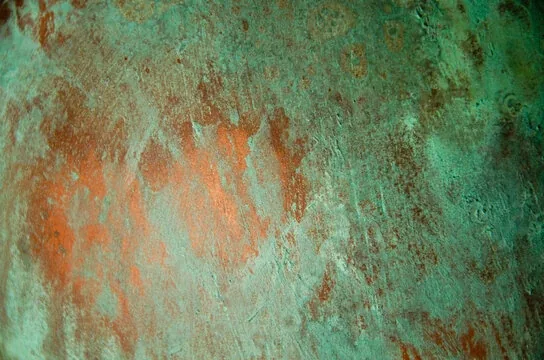
Why some of Tinza’s most beautiful pieces are meant to change? And why that’s a good thing?
Read Article
From ancient anvils to modern homes — how copper and brass have shaped human civilization for millennia.
Read Article