 No products in the cart.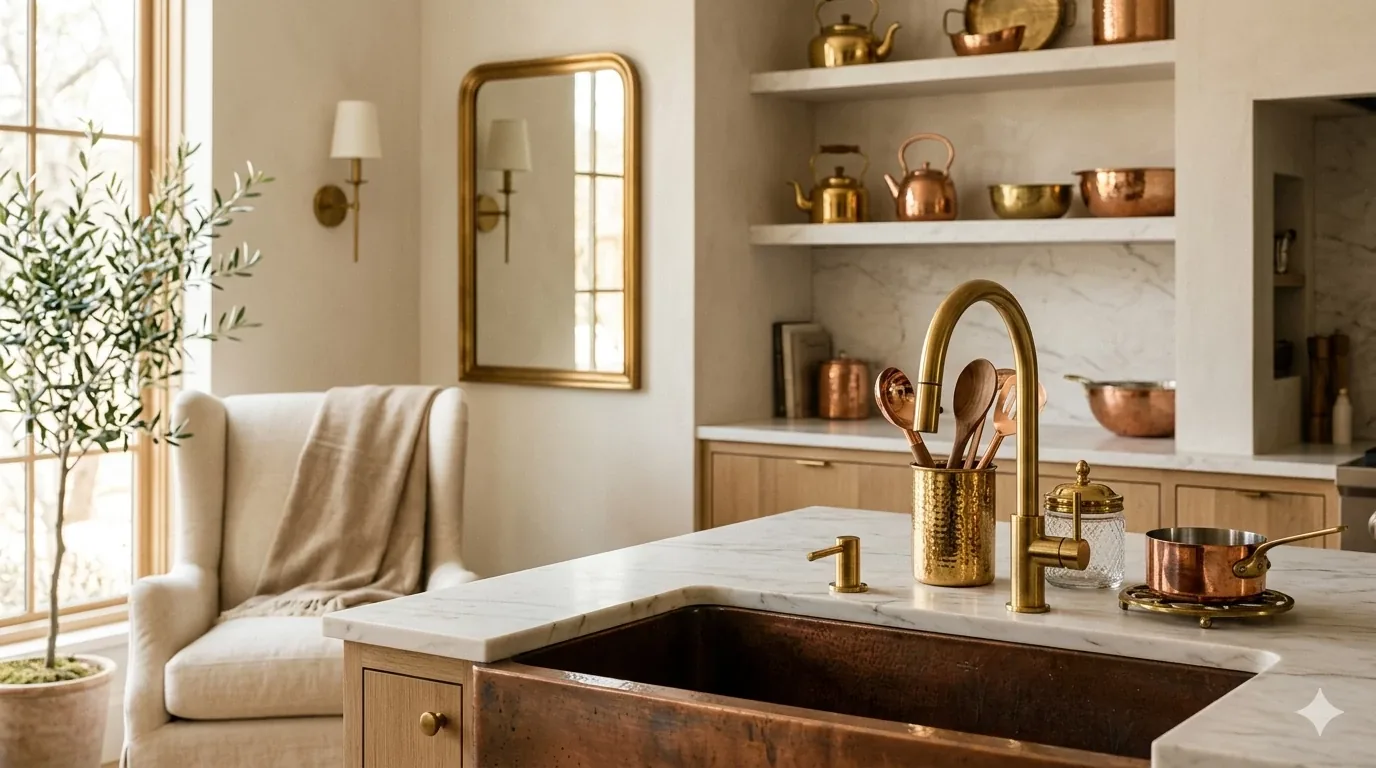
Design & Lifestyle Inspiration
Copper & Brass Are Back: What’s Trending in Interior Design?
Here’s how designers are using handcrafted metal to transform bathrooms, kitchens, and luxury spaces.
Read ArticleFrom hammer strike to final polish — a look inside the workshops where soulful décor takes shape.
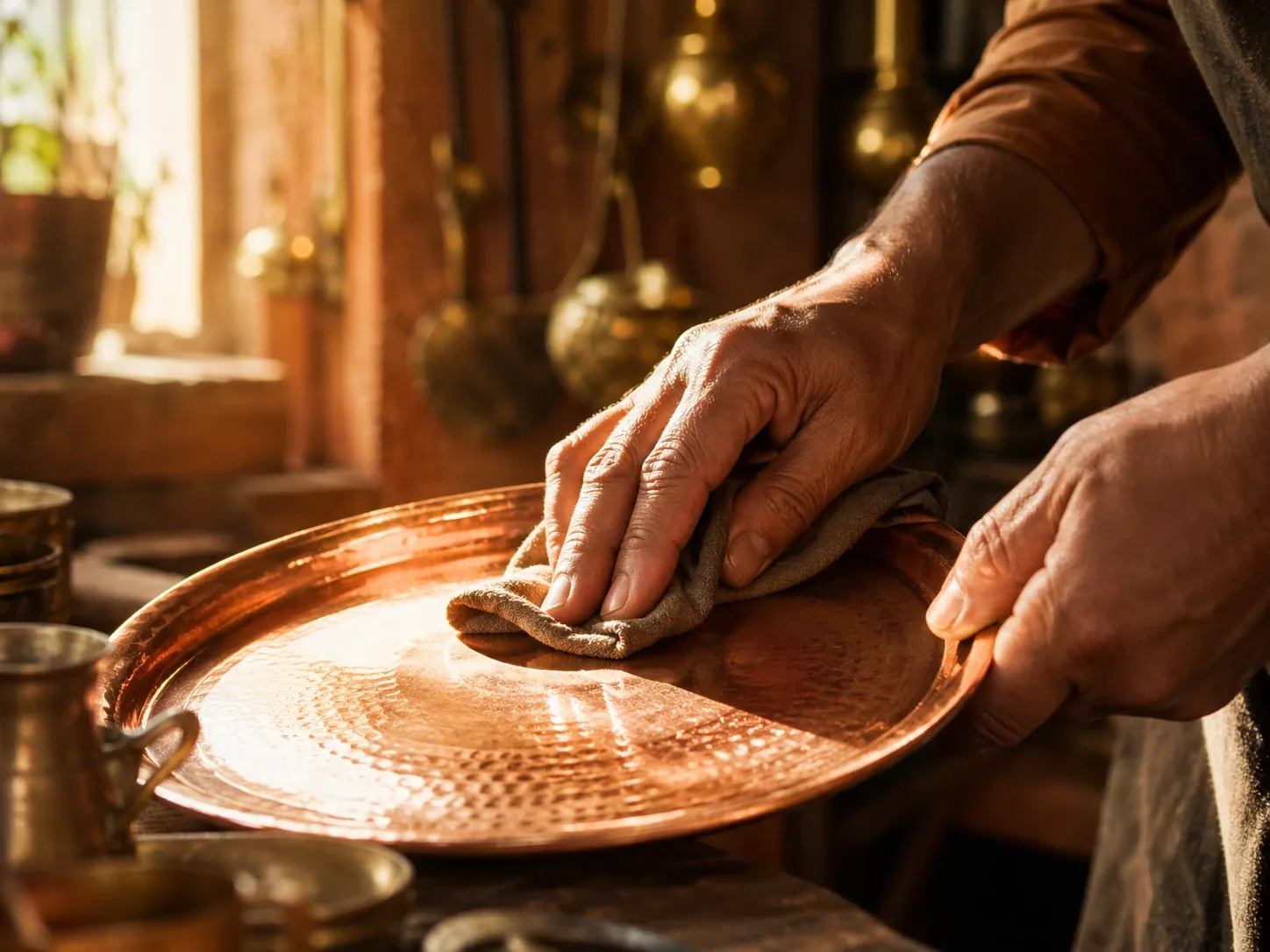
Every piece on Tinza begins as a raw sheet or ingot of copper or brass. But what happens next is anything but industrial. It’s a quiet dance of fire, force, and finesse — passed down through generations, reimagined for today’s homes.
It starts with metal. Copper and brass arrive as flat sheets, hollow tubes, or solid castings. Unlike factory production, where a machine stamps out hundreds of identical pieces, Tinza’s artisans handle each sheet individually. They feel its thickness, its grain, its memory.
Some workshops use recycled copper — melting down old pipes or scrap into fresh ingots. Others source virgin metal for its consistent purity. Either way, the first step is always human: inspecting the material for flaws, measuring twice, and imagining the finished form.
This is where the metal comes alive. Using specialized hammers, the artisan strikes the surface again and again. Each blow compresses and shapes the metal.
Not every piece is hammered from a single sheet. Some require bending, folding, and joining. Artisans use wooden forms or steel mandrels to shape copper tubes into complex pendant lights.
They solder seams with a torch — a delicate hand that knows exactly how much heat to apply. On larger pieces like bathtubs, multiple sheets are joined with hidden rivets or welded seams, then sanded perfectly flush so you’d never know where one sheet ends and another begins.
The raw metal after hammering is dull, sometimes rough. Finishing transforms it completely:
Before any piece ships, it must pass a rigorous quality framework check. Not by a machine, but by the exact same hands that made it.
Visual inspection: Under optimal light, the artisan checks for uneven hammer marks, stray scratches, or areas where the patina didn’t take correctly.
Structural check: Does the lamp feel balanced? Are the soldered joints completely solid?
Function test: Faucets are connected to water pressure, lights are wired and switched on, and drawer pulls are mounted to a test board before final clearance.
Mass production can make a copper bowl in seconds. But that bowl has no memory. No individual hammer stroke. No subtle variation in its rim or patina.
A Tinza piece carries the evidence of its making: a slightly irregular curve, a fingerprint under the lacquer, the warmth of a craftsman’s attention. These are not flaws. They are proof of humanity. Because our artisans control every step, they can also customize down to the inch.
Tinza is committed to preserving these heritage techniques. Many of our artisans apprenticed for years — learning to read the metal, to judge temperature by color, and to strike with total consistency. As we grow, we document their methods through video and photography, sharing the invisible labor behind every listing.
Here’s how designers are using handcrafted metal to transform bathrooms, kitchens, and luxury spaces.
Read Article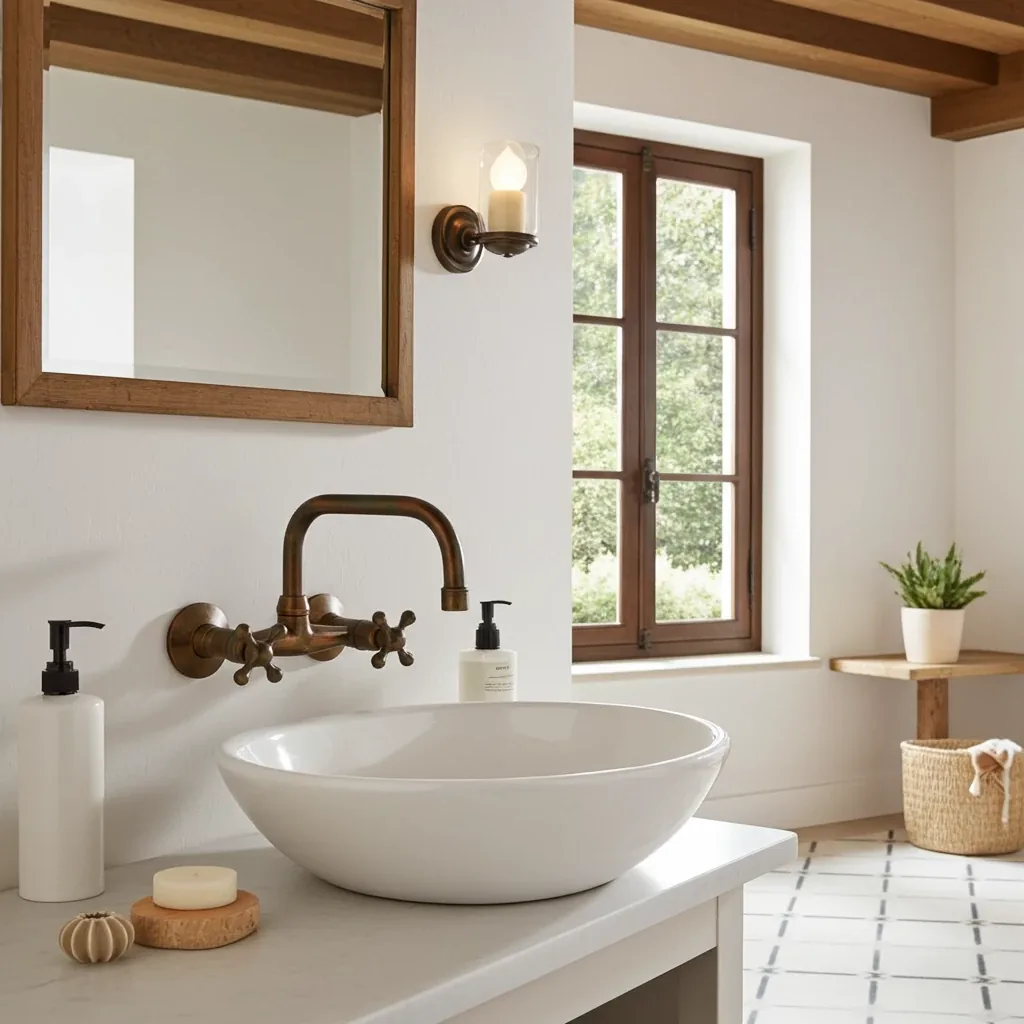
Why your grandmother’s copper sink might have been smarter than any modern disinfectant.
Read Article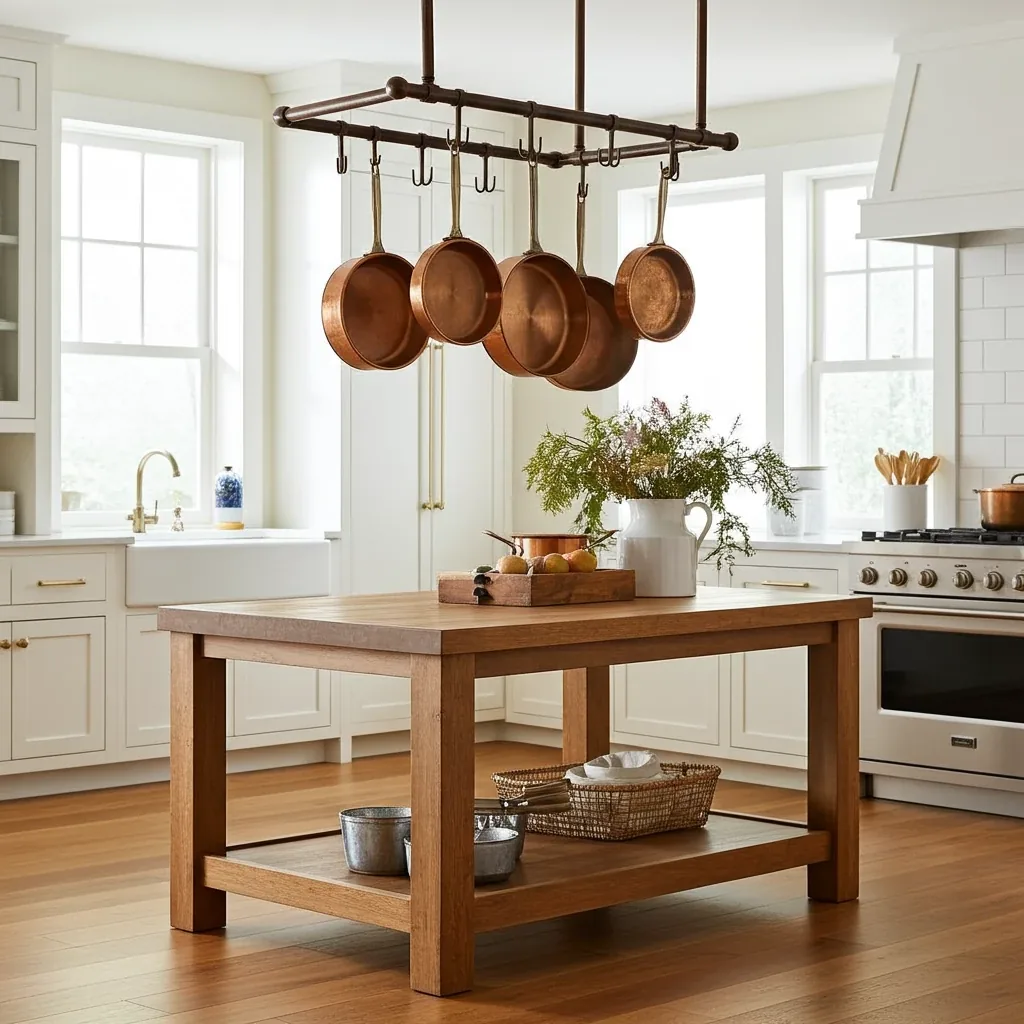
From ancient anvils to modern homes — how copper and brass have shaped human civilization for millennia.
Read Article